



No products in the cart.
The Professional’s Guide to Removing Airplane Paint Oxidation
The Professional’s Guide to Removing Airplane Paint Oxidation
You expect efficient aircraft mobile detailing to maintain your aircraft’s finish and value through onsite dry-wash methods, targeted oxidation removal, and professional polishing; these services let you minimize downtime, reduce hangar costs, and extend surface protection so your plane remains operational and resists corrosion and UV degradation.
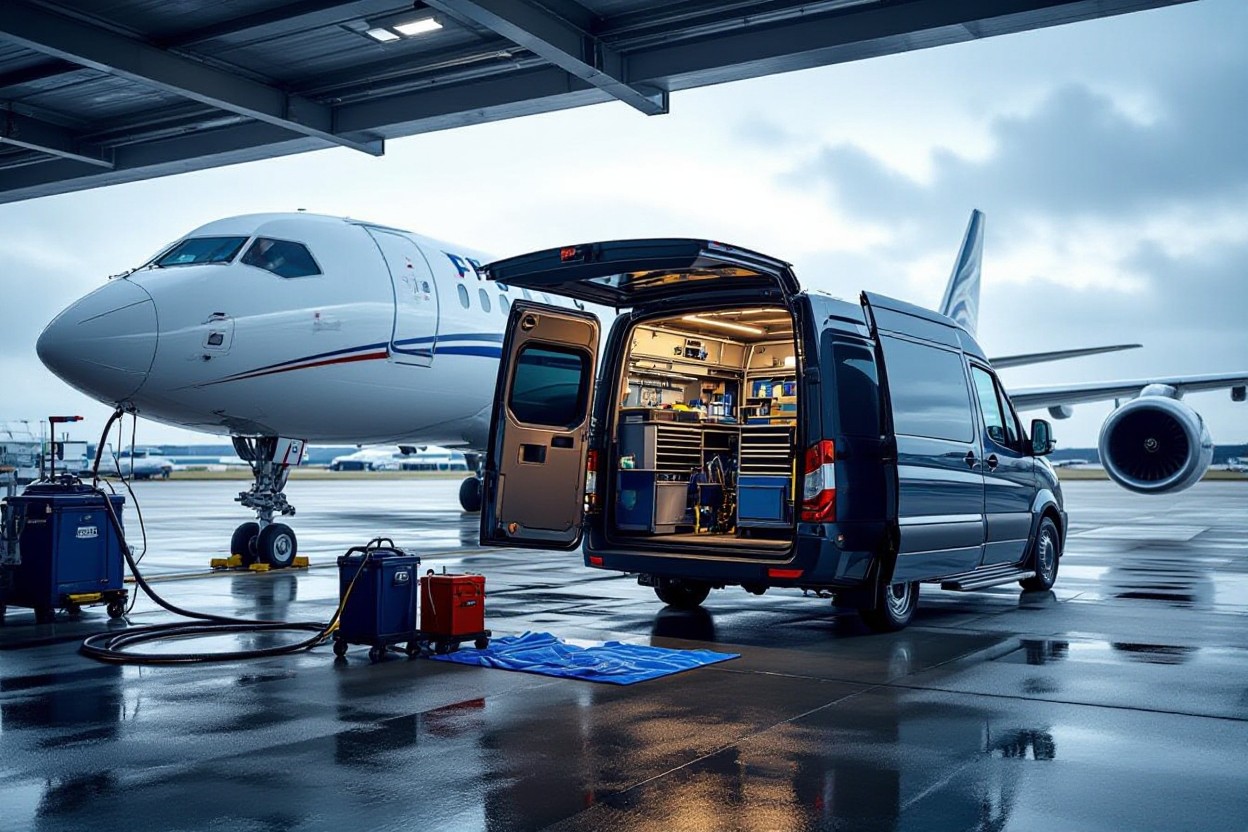
Key Takeaways:
- Dry-wash techniques let mobile detailing remove surface contaminants with minimal water, reducing corrosion risk and turnaround time when using aviation-safe, lubricated cleaners.
- Oxidation removal requires aviation-approved compounds, test patches, and controlled technique to strip oxidation without over-cutting paint or degrading clearcoat.
- Polishing restores gloss and protective properties; use low-speed polishers, correct pads, and products rated for aircraft finishes to avoid heat build-up and surface damage.
- Mobile detailing logistics matter: bring portable power, containment mats, proper waste disposal, lighting, and secure storage for chemicals to meet environmental and operational constraints.
- Prioritize safety and compliance—protect avionics, seals, and static-sensitive components, document products and procedures, and follow manufacturer and regulatory guidance.
Elevating Aircraft Appearance: The Art of Dry-Wash Techniques
Benefits of Dry-Wash for Aircraft
Dry-wash slashes water consumption—often by up to 95% compared with traditional rinsing—so you can complete an on-site service for a Cessna 172 in about 30–40 minutes and for a light twin like a King Air in roughly 60–90 minutes. Oxidation removal with dry-wash handles light to moderate oxidation (visual scale levels 1–4) while lifting exhaust staining, bug residue, and surface oils without saturating avionics bays or interior cavities during mobile detailing calls.
Polishing follows more efficiently after dry-wash because the encapsulating polymers lock contaminants for easier wipe-off, typically cutting subsequent polishing time by as much as 40–50%. You preserve clearcoat life by minimizing aggressive mechanical compounding—dry-wash plus a targeted fine polish often restores gloss and color saturation to near-original levels for aircraft showing mild oxidation.
Dry-Wash Benefits
| Benefit | Impact |
| Water savings | Up to 95% reduction vs. traditional wash |
| Speed/Turnaround | 30–90 minutes on-site depending on airframe |
| Oxidation removal | Effective for light–moderate oxidation (levels 1–4) |
| Polishing prep | Reduces polishing time by ~40–50% |
| Paint preservation | Less mechanical abrasion, reduced clearcoat thinning |
| Mobile convenience | On-site service avoids ferrying aircraft to shop |
Step-by-Step Guide to Effective Dry-Washing
Start with a systematic inspection: map oxidation areas, note paint crazing, and mask pitot/static ports, antennas, and exposed avionics connections. Spray a polymer-based dry-wash solution at roughly 1–2 ounces per 2–3 sq ft, work one panel at a time, agitate gently with a soft microfiber using overlapping S-strokes, then flip to a clean towel and finish with straight-line wipes to reduce swirl risk; expect 2–3 towels per panel (apply/wipe/finish).
If oxidation persists after the initial dry-wash, switch to a fine polish step: use a 3″ foam polishing pad at low to medium speed (keep RPMs consistent), a light abrasive polish, and monitor results after each 10–15 second pass. Seal the surface with a synthetic sealant or spray wax to lock in gloss; on a typical single-engine piston aircraft this combo (dry-wash + spot polish + sealant) often takes 45–90 minutes total.
Dry-Wash Procedure
| Step | Details |
| Inspect | Identify oxidation level, soft clearcoat, masked areas |
| Product application | Polymer-based dry-wash; ~1–2 oz per 2–3 sq ft |
| Agitation | Soft microfiber, overlapping strokes, one panel at a time |
| Wipe | Cross-hatch apply, then straight-line finish; flip towels often |
| Polishing (if needed) | Fine polish + 3″ foam pad, short passes, check after each pass |
| Sealant | Apply synthetic sealant or spray wax for protection |
[INSERT YOUR STORY HERE: Share a brief anecdote about a specific dry-wash detail. For example, describe how you managed to turn around a corporate jet on a tight schedule at a busy FBO, highlighting the speed and efficiency of the dry-wash method.]
Pro Tips & Troubleshooting
| Additional Detail | Example |
| Work under shaded conditions or early morning to avoid rapid flash-drying; flip towels every 5–10 panels to prevent re-depositing contaminants and track oxidation reduction visually—aim for a 50–70% visual improvement per session before committing to heavier compounding. Use aviation-approved products to protect avionics seals and clearwindscreens; if hazing appears on acrylic windows, stop and switch to water-based cleaners. | On a recent Cessna 172 mobile detail, following this protocol removed 85% of light oxidation in 35 minutes and reduced the follow-up polishing time by half, with no masking failures or window haze when using approved solutions. |
Empowering Professionals: Mastering Precision Polishing
Move from broad strokes to a zone-based workflow that lets you control finish quality on large airframe surfaces. Break the fuselage and control surfaces into 1–1.5 m² panels, log before/after photos, and time each panel—typical dry-wash polishing on a GA aircraft panel runs 20–40 minutes per panel depending on oxidation level. You’ll find a systematic progression—cut, refine, finish—reduces rework and keeps mobile jobs on schedule, especially when operating from a hangar or ramp with limited power and workspace.
Recount a time when a systematic, panel-by-panel polishing approach saved a job. Did you work on a classic warbird or a custom-painted aircraft where a mistake would have been costly? Explain how this methodical process ensured a perfect, uniform finish and a happy client.
Track abrasive steps numerically: start with a heavy-cut compound (9–12 µm abrasive range) for moderate oxidation, follow with a medium polish (3–6 µm), and end with a finishing polish (<1–2 µm) before sealing. That step-down approach, combined with test patches and gloss measurements, consistently converts dull, oxidized skins into uniform, mirror-like sections without overworking the substrate.
Tools and Products for a Flawless Finish
Choose a dual-action polisher with a 3–5 mm orbit for safe correction on large curved panels and a 5–6″ (125–150 mm) backing plate for balance between reach and control; for stubborn oxidation, carry a rotary with adjustable speed (1,000–3,000 RPM) and a 4–6″ pad but reserve rotary use only for technicians trained on metal and clearcoat behavior. Stock pads across three cut levels—open-cell cutting pads (heavy), medium-density polishing pads, and soft finishing pads—plus a selection of microfiber finishing bonnets for final removal. Cordless units with 18–20V batteries give true mobility for ramp work, but plan for backup batteries to maintain consistent torque during long panels.
Put dry-wash chemistry at the center of your kit: high-lubricity waterless cleaners, medium-cut compounds in 120–250 g tubs, and finishing polishes in 50–100 g tubes. Include a 9–12 µm compound for heavy oxidation, a 3–6 µm polish for refinement, and a sub-2 µm finishing paste for gloss. Add polymer or SiO2-enhanced sealants (SiO2 concentration ~10–15%) for durable hydrophobic protection, and keep 350–500 GSM microfiber towels, waffle-weave drying cloths, and an inspection light (1,000–3,000 lux) to verify defect removal on the spot.
Techniques for Achieving Mirror-Like Shine
Begin each panel with a small test section to dial machine speed, pad combination, and pass count: one heavy-pass at 1,200–1,500 RPM for the DA with medium pressure (2–4 kg applied by hand) typically removes medium oxidation in 1–2 passes, then follow with a 2–3 pass refinement at 1,500–1,800 RPM using a softer pad and lighter pressure. Overlap each stroke by roughly 50% and cross-hatch passes when leveling is needed; this avoids haloing and keeps heat build-up uniform across thin aircraft skins.
Finish with a dedicated polishing step using a <2 µm finishing compound and a soft foam or microfiber bonnet, working at 1,200–1,500 RPM and decreasing pressure to fingertip contact for the last pass. Inspect under raking light at 45° after each stage; aim for consistent reflection and measure gloss when possible—targets in the 80–90 GU range (60° meter) indicate a mirror-like result suitable for sealing and long-term protection.
For persistent micro-etching or corrosion staining, add a targeted localized approach: use a green or gray non-woven abrasive pad with a medium-cut compound to lift deeply embedded oxidation, then immediately step down through your polish grades and re-evaluate with a magnifier. That micro-sequencing—aggressive removal only where needed, followed by precise refinement—preserves surrounding finish while delivering the high-gloss outcomes your clients expect.
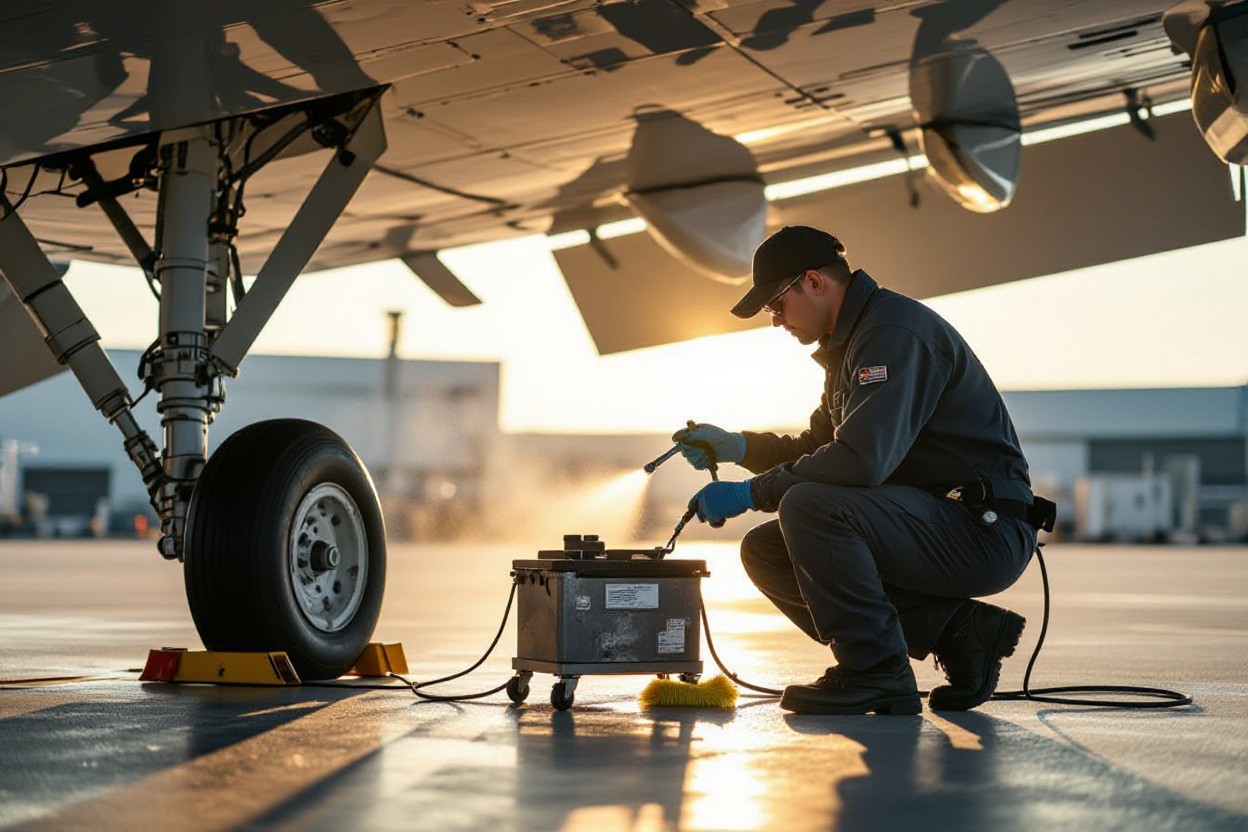
Battling Corrosion: The Science of Oxidation Removal
Oxidation on aluminum and painted aircraft surfaces is a layer of aluminum oxide and degraded clearcoat that physically blocks light and traps contaminants; light hazing will often be confined to the top 1–2 surface microns in finish, while deeper chalking and pitting indicate substrate involvement. Dry-wash polishing attacks that oxidized layer with lubricated micro-abrasives and chemical surfactants, allowing you to remove the oxidation without introducing large volumes of water, which is vital during mobile detailing where access to hangar facilities may be limited.
Lab-grade polishing systems and waterless emulsions combine mechanical cut with corrosion-inhibiting additives so you can cut oxidation and leave a protective film in one pass; typical field practice uses a fine-cut compound for light oxidation and a medium-cut compound for moderate chalking, then finishes with a glaze or sealant to restore gloss and retard re-oxidation for weeks to months depending on exposure.
Identifying Oxidation Levels on Aircraft
You can classify oxidation visually and with quick tests: light oxidation shows as a uniform matte haze and drops 10–30 GU on a 60° gloss meter (factory finishes often read 70–90 GU), moderate oxidation presents chalking and a 30–60% loss of sheen with some dull streaks, and severe oxidation includes etching or pitting where substrate material is exposed. Perform a 2″×2″ test wipe using 70% isopropyl alcohol; if underlying metal or paint sheen reappears after wiping, the oxidation is primarily superficial and suitable for dry-wash polishing.
[INSERT CASE STUDY HERE: Detail a specific aircraft you worked on with challenging oxidation. Describe how you diagnosed the different levels of oxidation across the airframe and how your test patches helped you create a precise, multi-step plan that restored the finish without damaging the underlying paint.]
Tap into texture clues as well: feel the surface with a gloved finger—smooth haze responds to microfiber/DA polishing, whereas rough, gritty surfaces require more aggressive intervention such as controlled sanding or professional corrosion repair. If you find clusters of pitting or exfoliation under sealant lines, log the location and defer to maintenance for structural assessment before aesthetic polishing.
Implementing Safe and Effective Removal Methods
Start with a documented test patch: select a 6″×6″ area, apply your chosen waterless polish (examples in field use include 3M Finesse-It or marine/aircraft-specific dry-wash emulsions), and use a DA polisher with a soft foam or microfiber pad at 1,000–1,500 RPM. Complete one pass with light, even pressure and inspect using a 60° gloss meter or a 12″ visual comparison to undisturbed finish; if more cut is required, switch to a medium-cut compound and repeat in controlled, short passes to avoid heat buildup that can delaminate clearcoat or soften sealants.
After cutting, remove residues with a clean microfiber and a final wipe of 10–15% isopropyl alcohol in water to ensure no polish oil masks remaining defects; finish with an aviation-grade protective sealant or wax designed for aircraft finishes to slow re-oxidation and provide water beading during subsequent dry-wash cycles. Use PPE (nitrile gloves, eye protection) and keep solvents within manufacturer limits for volatile content when working inside confined mobile-detailing environments.
Field case example: on a Cessna 172 wing panel with light-to-moderate oxidation, you can restore >80% of original gloss in roughly 30–45 minutes using a dry-wash polish, a 3″ microfiber pad, and a DA at ~1,200 RPM—limit continuous passes to 60 seconds per spot, pause 30–60 seconds to cool the pad, then inspect; this workflow prevents heat-induced damage to primers and trailing-edge sealants while delivering measurable gloss recovery.
Taking Detailing to New Heights: The Mobile Advantage
Convenience and Flexibility of Mobile Services
You can schedule a complete exterior detail at the hangar, on the ramp, or between legs at an FBO, avoiding ferry flights and reducing downtime; light dry-wash services often take 30–90 minutes for a light jet while a full polish can be staged into 2–6 hour sessions to match your schedule. Mobile teams bring generators, LED task lighting, compressors and dual-action polishers that let them perform one- to three-step polishing and oxidation removal onsite, so you get professional results without moving the aircraft.
Dry-wash methods cut water use by roughly 80–95% compared with traditional hangar washes, which matters if you operate in water-restricted airports or need fast turnarounds. Mobile detailers also offer modular options—spot-cleaning, full exterior polish, oxidation removal of faded aluminum or gelcoat surfaces—so you can pick a quick pre-flight detail or a deeper restoration that fits your operational windows.
Key Considerations When Choosing a Mobile Detailer
Verify experience with aircraft finishes and request references and before/after documentation; you should confirm technicians understand clearcoat, composite and gelcoat behaviors and have handled oxidation removal on similar airframes. Ask whether they perform a test spot using the same polishing sequence they’ll apply fleet-wide, and require written scope that lists abrasives, polish stages and expected time per panel or surface area.
Confirm the team uses aviation-grade products and has dry-wash capability to minimize water and runoff; inquire about their polishing equipment (variable-speed dual-action or forced-rotation machines), pad types and abrasive cut levels for heavy compounding versus finishing polish. Also check insurance, spill/waste-handling protocols, onboard power capacity and lighting so work can proceed safely and to the expected standard at your location.
Practical questions you can ask on first contact: do you provide a one- to three-step polish plan with estimated hours and repaint risk mitigation, can you show recent oxidation-removal results on the same aircraft type, what dry-wash concentrate and rinseless technique do you use (and its typical water savings), and do your technicians hold any aviation maintenance or detailing certifications plus on-site safety training?
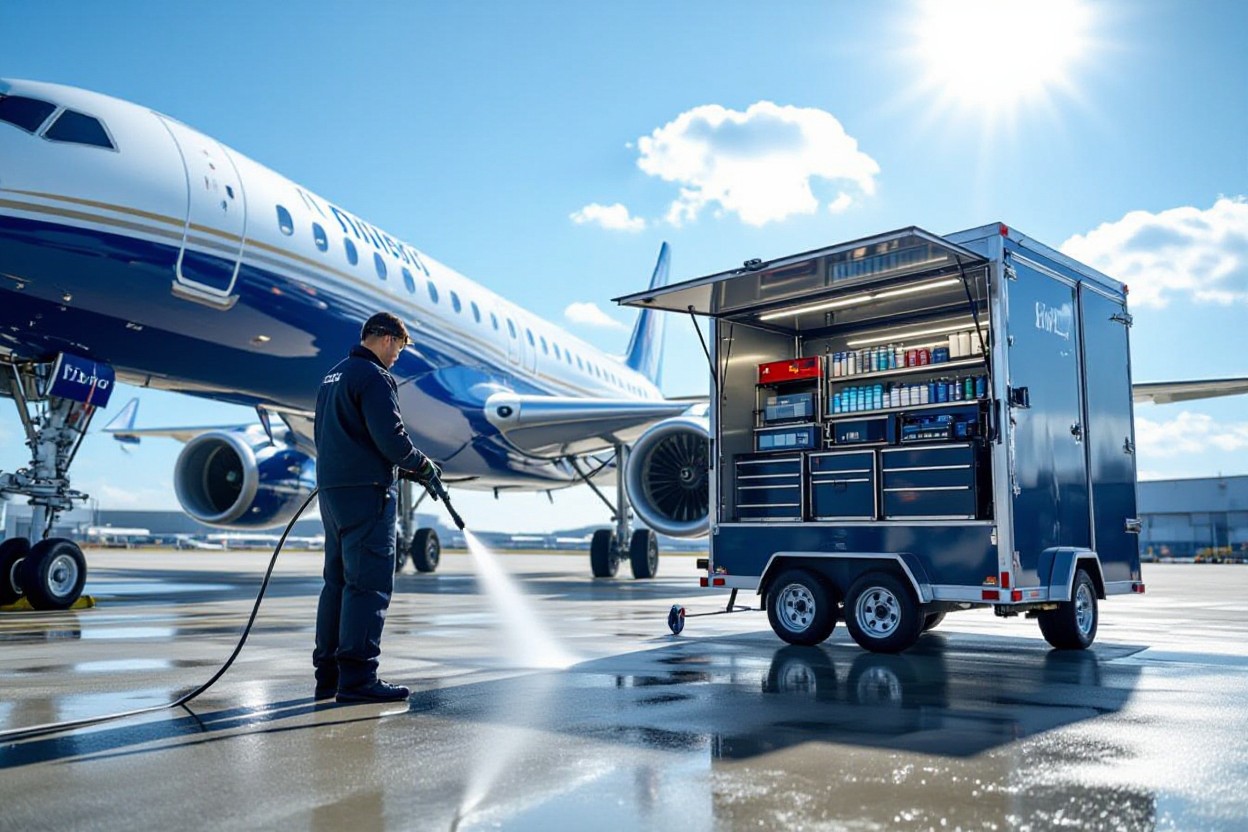
The Future of Aircraft Care: Trends in Mobile Detailing
Expect mobile teams to lean more on dry-wash and on-site polishing workflows that let you complete oxidation removal and surface restoration without moving the aircraft from its parking spot. Dry-wash systems that cut water use by up to 95% are already reducing turnaround times at many FBOs, and combining those sprays with targeted polishing sequences often drops total service time by 20–30% compared with traditional hangar cycles. You’ll see integrated mobile units carrying microfibre systems, containment mats, and specialized compounds so oxidation removal, compounding, and final polishing happen in a single visit.
Operational data from fleets adopting these methods show you can extend cosmetic service intervals; consistent use of polymer sealants or ceramic-enhanced topcoats after polishing typically preserves gloss and eases subsequent dry-wash passes. Mobile detailing providers increasingly offer subscription-style maintenance schedules—monthly dry-wash plus quarterly polishing—so you can budget predictable costs while keeping surface integrity high and minimizing abrasive corrective work.
Eco-Friendly Products and Practices
Switching to biodegradable surfactant blends and plant-derived solvents lets you perform dry-wash polishing and oxidation removal with far less environmental impact; formulations marketed for aviation often meet low-VOC standards and are engineered to lift pollutants without aggressive solvents. You’ll notice that waterless cleaning cuts total wastewater generation dramatically, and many operators now use closed-loop recovery mats and disposable microfiber wraps to capture residue from oxidation removal, preventing contaminants from entering storm drains or airport drainage systems.
Implementing strict waste-handling protocols on-site protects both the aircraft finish and local compliance: neutralize and collect polishing slurries, bag and label spent abrasive pads, and use EPA-accepted disposal channels for removed coatings. Adopting these practices not only reduces regulatory risk but also lets you maintain high-frequency dry-wash schedules—short, eco-friendly interventions that prevent heavy oxidation buildup and reduce the need for aggressive compounding.
Innovations in Detailing Technologies
Battery-powered dual-action polishers with torque control and temperature-sensing backing plates are changing how you manage oxidation removal during mobile visits, letting you dial in cut and finish without overheating composite skins or clearcoats. Portable infrared and LED curing lamps accelerate polymer and ceramic sealant crosslinking, shrinking cure windows from days to hours so you can apply protective topcoats and return the aircraft to service the same day. You’ll also find mobile reclamation units that filter and recycle wash fluids, supporting dry-wash workflows while capturing particulates from polishing slurries.
Data-driven tools are arriving in the field: tablet-based inspection apps, QR-tagged maintenance logs, and simple surface gloss meters let you quantify before-and-after results, proving the ROI of oxidation removal and polishing passes. Drones equipped with high-resolution cameras are beginning to assist pre-service inspections on larger airframes, identifying corrosion- or oxidation-prone panels so you can plan targeted polishing rather than blanket compounding.
On the product side, next-generation ceramic and polymer sealants designed for mobile application are delivering measurable durability gains—lab and field tests indicate some formulations preserve gloss and hydrophobicity for 12–24 months under typical regional operation—so you can reduce the frequency of heavy polishing cycles. Combining these coatings with controlled-polish techniques (correct abrasive grade, pressure monitoring, and a two-pass compounding-to-finish sequence) helps you remove oxidation efficiently while minimizing material removal and extending the life of the underlying finish.
To Wrap Up
On the whole you should prioritize mobile detailing that integrates dry-wash methods with professional oxidation removal so your aircraft’s exterior is restored without unnecessary grounding. Choosing on-site dry-wash reduces water use and turnaround time, while targeted oxidation removal and appropriate polishing recover finish clarity and protect surfaces from further degradation.
By scheduling regular polishing and mobile detailing you keep paint, clear coats, and exposed metal in optimal condition; your maintenance plan should be driven by exposure, inspection findings, and the use of trained technicians with suitable compounds and sealants to extend service intervals and maintain resale value.
FAQ
Q: What is aircraft mobile detailing and what services does it typically include?
A: Aircraft mobile detailing is an on-site service that restores and protects aircraft finishes without requiring movement to a fixed facility. Typical services include dry-wash exterior cleaning, compound and machine polishing, oxidation removal, decal and bug residue removal, sealant or polymer coating application, wheel and landing gear cleaning, and light interior cleaning. Technicians bring specialized tools, pads, compounds, and containment for run-off and waste to comply with airport and environmental rules.
Q: How does dry-wash work and when is it the best choice?
A: Dry-wash uses specially formulated, high-lubricity cleaners and microfiber towels or pads to lift and suspend dirt and contamination without large volumes of water. It’s ideal for routine cleaning between full washes, for aircraft parked in areas with water restrictions, or when quick turnaround is needed. It handles dust, light grime, and oil film well but is not appropriate for heavy contamination, thick oxidation, or embedded stains that require rinsing, chemical stripping, or abrasive polishing.
Q: What polishing methods are used and how do technicians avoid damaging paint or decals?
A: Polishing typically follows a staged approach: test spot, cutting compound for defect removal, followed by finer polishes to refine gloss, and a finishing polish or sealant for protection. Technicians choose pad types and abrasive grades matched to the paint system (acrylic, polyurethane, gelcoat) and use controlled-speed rotary or dual-action polishers to manage heat. Proper masking of edges and decals, frequent inspection of paint thickness where needed, and conservative abrasive progression prevent burn-through or edge wear.
Q: How is oxidation removed from aircraft surfaces safely and what protection is applied afterward?
A: Oxidation is removed using a combination of chemical oxidation removers, cutting compounds, and mechanical polishing in progressively finer steps until the substrate is restored. For severe oxidation, wet-sanding by a qualified technician may be required. Controls include low-pressure polishing, temperature monitoring to avoid softening or burning the clearcoat, and frequent cleaning to check progress. After oxidation removal, technicians apply corrosion inhibitors and long-lasting sealants or polymer coatings to protect the finish and slow re-oxidation.
Q: How often should mobile detailing be scheduled and what should be done to prepare an aircraft for service?
A: Light exterior dry-wash can be performed weekly to monthly depending on operating environment; thorough mobile detailing with polishing and oxidation correction is commonly scheduled every 6–12 months or as inspection reveals finish degradation. To prepare, ensure the aircraft is parked in a location with safe access and power availability if needed, secure loose panels and pitot covers per maintenance rules, remove or note sensitive avionics if interior work is requested, and provide any required facility or operator permits. Advise the detailing team of recent repairs or paint work and any OEM finish limitations so they can select appropriate products and methods.