



No products in the cart.
Dirty Panels, Lost Profits: Is Solar Panel Cleaning Worth the Cost?
Is Solar Panel Cleaning Worth the Cost?
Over time, dust, pollen and bird droppings build up on your arrays and reduce efficiency; by scheduling regular cleaning you restore optimal sunlight capture, increase energy production, extend panel lifespan and protect your investment while lowering maintenance costs and improving safety and warranty compliance.
Key Takeaways:
- Boosts energy output and reduces electricity bills by removing dirt, dust, and bird droppings.
- Extends panel lifespan and delays costly replacements.
- Prevents hot spots and equipment damage, lowering repair and maintenance expenses.
- Improves system performance consistency, especially in dusty or rainy climates.
- Maintains warranty compliance, enhances curb appeal, and supports higher property resale value.
Unseen Impacts of Dirt: The Science Behind Solar Efficiency
The Role of Dust and Debris in Energy Loss
Fine dust and particulate matter reduce the solar irradiance reaching your cells by scattering and absorbing sunlight; typical soiling losses range from about 5% in relatively clean, wet climates to 20–30% or more in dry, dusty environments. Non-uniform deposits—bird droppings, pollen, or cement dust—create localized shading that forces bypass diodes to engage or drives parts of a module into mismatch, so a small dirty patch can cause disproportionately large drops in string output.
Different contaminants affect performance differently: salty marine spray and industrial sulfates can chemically etch glass or corrode frame seals over months, producing semi-permanent losses, while organic films from insects or pollen tend to adhere and require stronger cleaning methods. Field reports show utility-scale arrays recovering double-digit percentage gains after the first professional clean (for example, a desert array regained roughly 12–18% of annual yield after scheduled washes), so your cleaning cadence directly translates into recoverable kilowatt-hours and faster payback.
How Environment and Geography Affect Solar Performance
Local climate determines both how fast panels soil and what type of cleaning you need: arid, windy basins accumulate fine sand and dust rapidly; coastal sites face salt deposits and chloride-induced corrosion; urban rooftop arrays collect soot and acidic residues that can degrade coatings. Elevation and seasonal patterns matter too—snowmelt often leaves a mineral residue that sticks, while long dry spells let layers build until a single rain event causes streaking and concentrated soiling.
Array design and tilt interact with geography to change soiling rates: low-tilt or flat-mounted systems can experience two to three times the deposition of steeply tilted modules, and partial soiling on one module in a series string can throttle the entire string’s output because of series wiring and mismatch losses. You should monitor string-level production and soiling ratio metrics to decide whether manual cleaning, automated wash systems, or more frequent maintenance will return the most energy per dollar invested.
Practical guidelines based on location: check your yield against expected insolation weekly during dusty seasons, schedule professional washings monthly in high-dust deserts, quarterly at coastal or industrial sites, and annually in temperate, rain-cleaned regions; installing simple soiling sensors or performing quick visual inspections after storms will let you shift from calendar-based to performance-based cleaning and maximize the benefit of each service visit.
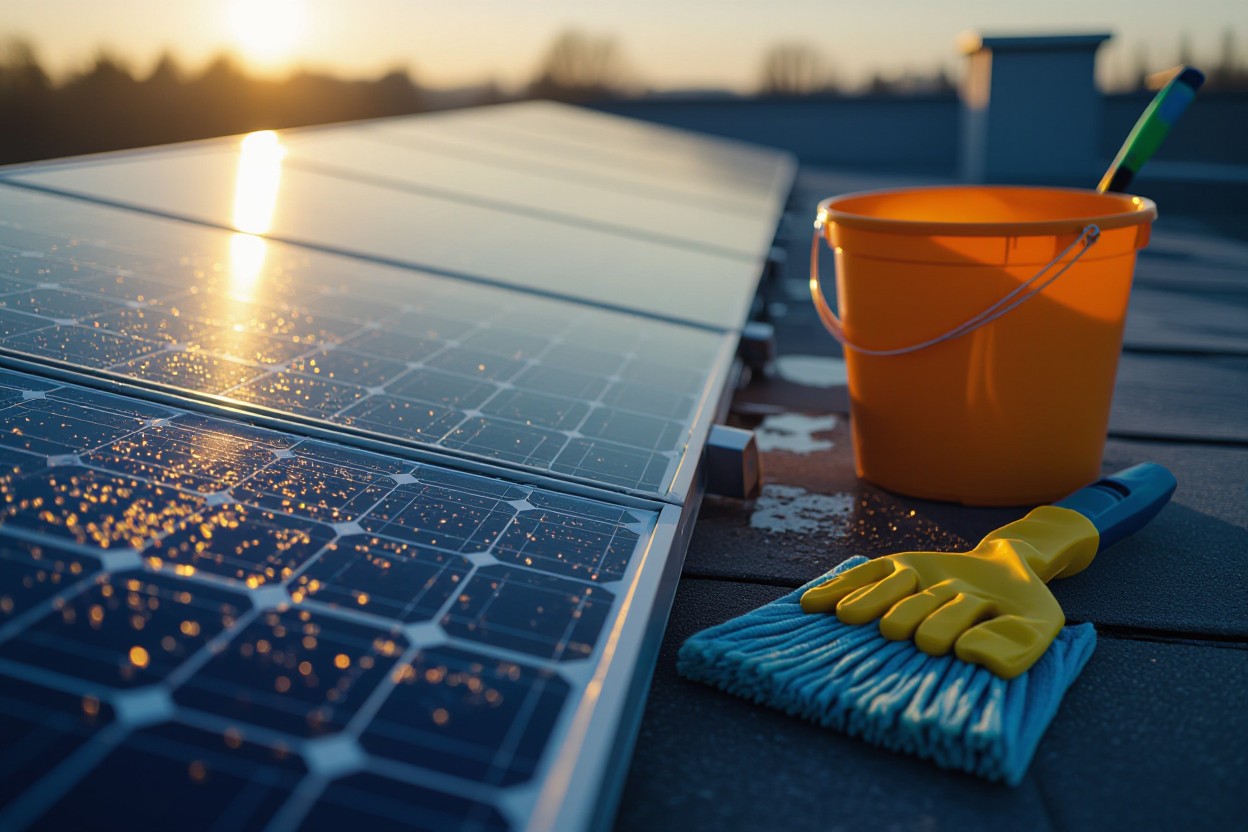
Cost-Benefit Analysis: Is Solar Panel Cleaning Worth It?
Quantifying the tradeoff comes down to how much generation you recover versus what you pay to recover it. Soiling losses typically range from about 5% in suburban settings to 15–25% in dusty, agricultural, or desert environments; on a 6 kW system producing roughly 7,200 kWh/year, a 10% loss equals about 720 kWh lost annually. At $0.15/kWh that’s roughly $108/year in lost production — meaning a single professional clean costing $100–$250 can break even in about one to three years in moderate-to-high soiling areas. Low-soiling rooftops often only see 1–4% losses, where annual savings may be $20–$50 and payback times become much longer unless you cut cleaning costs or combine visits with other maintenance.
Factor in cleaning frequency and energy prices to refine decisions: cleaning twice a year makes sense if seasonal dust or pollen repeatedly cuts output, while once every 1–3 years may suffice for cleaner neighborhoods. DIY cleaning tools and solutions can reduce per-visit cost to $20–$50, but you must weigh safety risks and potential warranty issues; professional service typically ranges $75–$300 per visit depending on system size and access. Use your inverter/monitoring data to calculate actual pre-cleaning losses and plug those kWh figures into your local rate to get a precise ROI instead of relying on averages.
Calculating Potential Energy Gains vs. Cleaning Costs
Start by pulling your production data for similar weather periods before and after suspected soiling events; a clear-day monthly comparison gives a realistic estimate of soiling losses specific to your site. Multiply the estimated lost kWh by your retail electricity rate to get annual dollar losses — for example, recovering 500 kWh/year at $0.20/kWh yields $100/year. Compare that to service quotes: residential pros commonly charge $2–$8 per panel or $100–$300 per system visit, while commercial jobs are quoted per kW or square meter, so scale matters.
Include ancillary costs and frequency in your math: ladder rental, access fees, or travel surcharges can add $30–$100 to a job; extreme events (post-harvest dust, wildfire ash) may justify one-off cleans that produce immediate gains. If monitoring shows persistent >8–10% losses, annual or biannual professional cleaning often pays back within 1–3 years; if losses are <3–4%, you’ll likely wait several years for payback and might prefer a light DIY approach or targeted spot-cleaning after heavy soiling.
Long-term Savings: A Look at Maintenance and Lifespan
Consistent cleaning reduces the likelihood of permanent soiling, hotspots from uneven shading, and debris-driven bypass diode stress, all of which can accelerate degradation or trigger premature failures in modules and inverters. Typical module degradation sits around 0.5–1% per year; preventing chronic soiling can help you maintain expected production and avoid the effective acceleration of that degradation. For you, that means steadier cash flows from your system and lower probability of early replacement costs for panels or inverters, which can run into the low thousands for residential systems.
Quantify the long-term value by comparing cleaning costs to avoided replacement and lost-revenue scenarios: if a clean schedule costing $150/year extends the useful life of your system by 3 years, and your system produces 7,200 kWh/year at $0.15/kWh, the avoided lost revenue alone is roughly $3,240 — far outweighing routine cleaning expenses. Maintain logs and monitor production trends to build evidence for warranty claims and tune cleaning frequency so you maximize lifespan benefits without overspending on unnecessary visits.
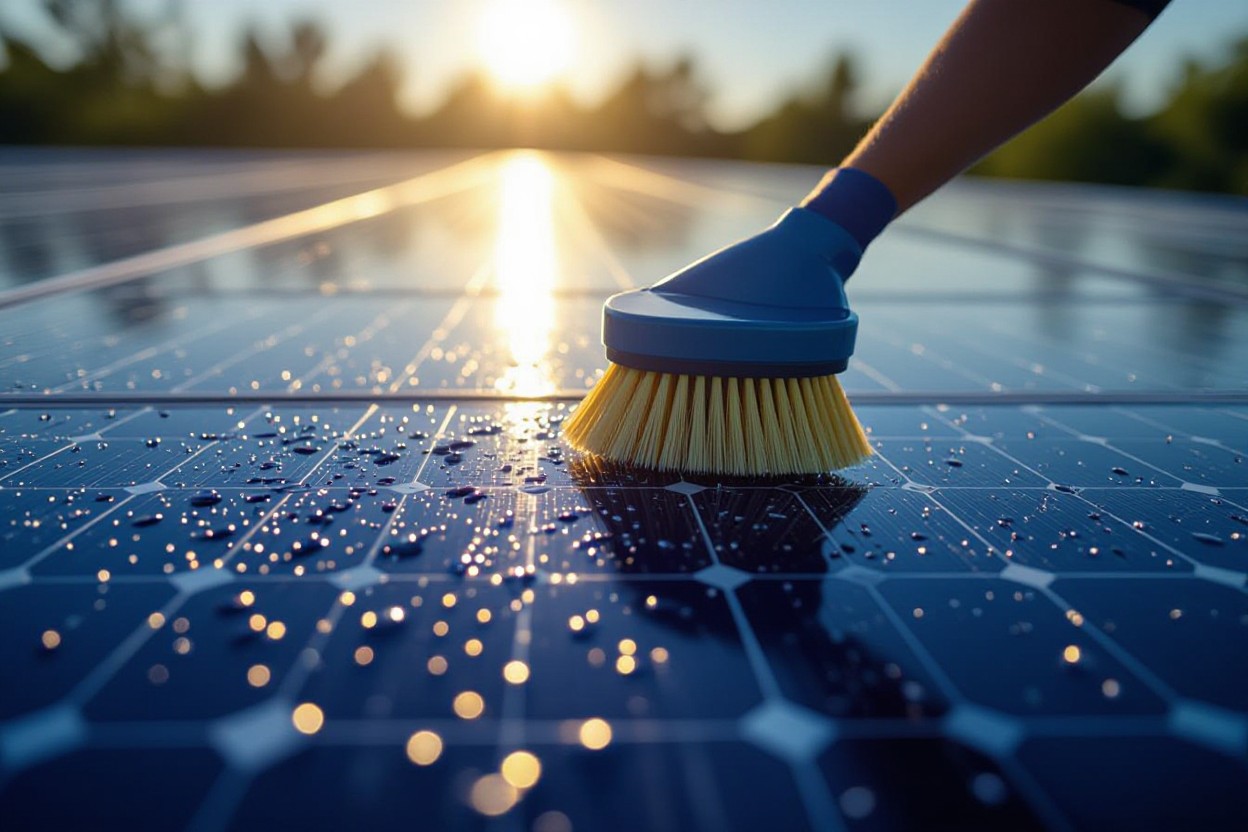
Best Practices: Techniques for Effective Solar Panel Cleaning
Schedule cleaning based on your site: inspect every 3–12 months, with high-soiling or coastal locations checked every 3–6 months. Soiling can reduce output by roughly 5–25% depending on dust, pollen, bird droppings or salt; field reports in arid regions often show 10–20% recovery after a proper cleaning. Track inverter energy data before and after a cleaning so you can quantify the actual gain at your site and adjust frequency accordingly.
Choose cool, overcast mornings or late afternoons for cleaning to avoid thermal stress on glass and sealants; panels above about 40°C can be vulnerable to rapid temperature changes. Inspect modules visually and photograph any microcracks, delamination or hotspot discoloration before you start so you can report damage and avoid exacerbating existing defects.
Recommended Tools and Cleaning Solutions
You should equip yourself with soft nylon or microfiber cleaning heads on a fiberglass extension pole, a rubber-blade squeegee, a low-pressure garden hose, and a bucket. Carry a ladder with slip-resistant feet, a fall-arrest harness for roof work above ~2 m, non-slip footwear, and microfiber towels for edge drying — these reduce the chance of scratching and help you work faster and safer.
Use deionized or distilled water to minimize mineral spotting; if organic grime or oil is present, add a mild pH-neutral biodegradable detergent at manufacturer-recommended dilution (typically a few drops per gallon). Avoid abrasive pads, ammonia, bleach, or strong alkaline cleaners that can etch anti-reflective coatings; for heavy deposits consult the panel maker or a professional service.
Recommended Tools & Solutions
| Deionized/distilled water | Prevents mineral spots; use for final rinse and primary cleaning |
| Soft nylon brush / microfiber head | Removes dust and bird droppings without scratching glass |
| Rubber squeegee | Quick, streak-free drying; use top-to-bottom strokes |
| Fiberglass extension pole | Access panels from ground/ladder without walking the roof |
| Low-pressure hose / nozzle | Pre-soak and rinse; avoid pressure washers |
| Mild pH-neutral detergent | Use only when needed; dilute per label to ~0.1–1% |
| Safety gear (harness, gloves, non-slip shoes) | Required for rooftop work above 2 m; use buddy system |
Step-by-Step Guide to Cleaning Solar Panels Safely
Shut down your PV system at the inverter and isolate DC per manufacturer instructions before any roof work. Check local weather and perform cleaning on cool, calm days; wet panels heat slowly and avoid rapid thermal cycling. Start by taking timestamped photos and recording inverter performance for a baseline. Wet the array with low-pressure water, apply a few wipes with a soft head or microfiber, then rinse thoroughly from top to bottom to carry debris off the array.
Secure yourself with a harness when working above ~2 m and maintain a 75° ladder angle for stability. Use a two-person team for roof jobs so one person manages tools and safety while the other cleans. After drying with a squeegee, inspect each module for new damage, log post-cleaning energy output, and compare to the baseline; many systems show 3–8% immediate uplift in temperate zones and 10–20% in dusty environments.
Measure string or inverter energy before and 24–72 hours after cleaning to filter out short-term irradiance changes; a handheld clamp meter or the inverter’s monitoring portal will reveal the net gain. Track cleaning costs (labor + materials) against recovered kWh over the following month to calculate payback and refine your cleaning interval.
Cleaning Steps & Details
| Shutdown | Turn off inverter and isolate DC per panel/inverter manual |
| Weather & timing | Choose cool, overcast mornings or late afternoon; avoid high winds |
| Safety setup | Harness for >2 m, stable ladder at 75°, buddy system recommended |
| Pre-clean inspection | Photograph modules, note cracks/soiling hotspots, log inverter data |
| Wet rinse | Low-pressure hose to remove loose debris before scrubbing |
| Gentle scrub | Soft brush or microfiber with deionized water or mild detergent |
| Final rinse & dry | Top-to-bottom rinse, squeegee to prevent streaks, towel edges |
| Post-clean check | Inspect for damage, restart system, log energy output for ROI |
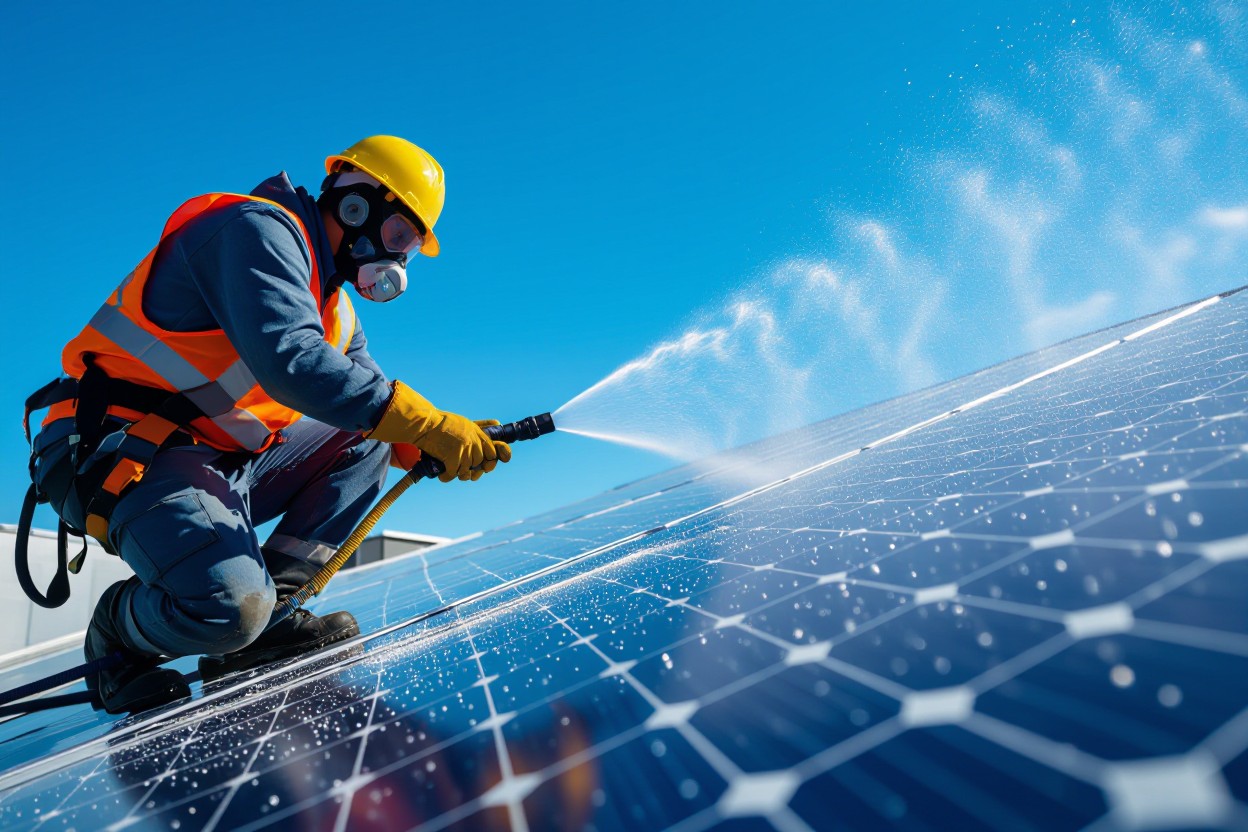
The Environmental Angle: Sustainability and Solar Cleaning
You can directly tie routine cleaning to tangible sustainability gains by preserving the energy output your panels were designed to deliver; field studies and industry reports commonly show soiling-related losses between about 3% and 25% depending on location, with typical residential recoveries after cleaning in the 5–15% range. Over a year that translates into hundreds of kilowatt-hours recovered for an average home system, which lowers the effective carbon intensity of the electricity you generate and stretches the lifetime value of installed equipment.
Smarter cleaning decisions also minimize indirect environmental costs: choosing low-impact methods reduces water stress, avoids frequent replacement of components, and prevents efficiency degradations that would otherwise necessitate additional grid-backed generation. You get a twofold benefit — higher on-site production plus reduced upstream emissions tied to manufacturing and new installations.
Water Usage and Eco-Friendly Approaches
Most residential soft-wash services use between roughly 5 and 50 liters of water per 10-panel array depending on technique and soil level, while large-scale utility crews that employ high-efficiency deionized-water systems can fall below that range per panel because of targeted delivery and minimal rinsing. Water-fed pole systems with purified water reduce spotting and chemical use, whereas simple hose-and-sponge jobs tend to consume more water and may leave residues that degrade performance faster.
Waterless or low-water options are increasingly practical: microfiber rollers, air blowers, and robotic brushes can eliminate or drastically cut freshwater consumption, though you must weigh abrasion risk and effectiveness on heavy grime. Closed-loop or reclaimed-water cleaning for commercial sites can further shrink freshwater demand; several utility-scale operations report using recycled water or filtration units to reduce freshwater input by large margins while keeping yield losses under control.
Impact on Solar Production and Carbon Footprint Reduction
If your 5 kW rooftop system produces about 6,000 kWh per year, recovering 5% lost to soiling adds roughly 300 kWh annually; using a grid emissions factor of 0.5 kg CO2 per kWh, that equates to about 150 kg CO2 avoided each year. Larger recoveries of 10–15% translate to 300–900 kWh and 150–450 kg CO2 saved, so even modest cleaning frequency yields measurable carbon reductions when scaled across neighborhoods or community solar sites.
Operational examples highlight the point: arrays in arid, dusty regions routinely see post-cleaning gains near 20–30%, so a utility-scale field that restores a 20% loss after a dry season can cut annual output losses from megawatt-hours down by tens to hundreds of MWh — a direct, verifiable reduction in grid-supplied emissions and peak-demand pressure.
Extending panel lifetime also lowers lifecycle emissions per kWh, since the embedded carbon of panels and racking is amortized over more delivered energy; with typical PV energy-payback times around 1–3 years depending on technology and location, restoring even 10% of annual output can shave months off the payback timeline and improve the overall carbon-return profile of your system.
Professional vs. DIY: Making the Right Choice
You can save $50–$150 per visit by cleaning panels yourself, but factor in the risk of falls, ladder damage, and inadvertent abrasion of anti-reflective coatings. Professionals typically charge $100–$300 for a 6–10 kW residential array and bring deionized water, soft-bristle tools, fall protection, and insurance that protects both your roof and the installer.
Payback from a professional service depends on local soiling rates: in dusty or coastal locations technicians often recover 8–20% of lost generation, whereas light pollen or rain-scour areas may see under 5% improvement. If your array normally yields 6,000–8,000 kWh/year, a 10% recovery equals 600–800 kWh — often enough value to justify a single professional cleaning.
Pros and Cons of Hiring Professionals
You gain documented performance checks, safer access on steep or multi-story roofs, and cleaning methods that comply with manufacturer warranty terms. Technicians can spot module-level issues (hotspots, delamination, junction-box corrosion) that a basic DIY wash will miss.
Costs, scheduling, and the potential for routine upselling are the main downsides; expecting technicians to clean more frequently than necessary can erode savings. You should weigh the frequency of soiling, system size, and your comfort with roof work before committing to ongoing contracts.
Pros vs Cons of Hiring Professionals
| Professional safety gear and fall protection | Higher per-visit cost ($100–$300 typical) |
| Use of deionized water and soft brushes to avoid streaks or coating damage | Scheduling required — may not align with peak soiling events |
| Warranty-friendly procedures and documentation | Possible upselling for repeat/recurring services |
| Detailed inspection can catch microcracks, hotspots, or wiring faults | Less direct control over cleaning frequency and technique |
| Performance reports and before/after yield comparisons | Variable quality between providers — vetting needed |
| Efficient for large or commercial arrays (time and labor savings) | Logistics and access constraints for remote/rural sites |
| Quick response after storms or heavy soiling (reduces downtime) | May require access permissions for gated/condo properties |
| Liability and insurance cover roof or panel damage | Potential scheduling cancellation in wet/icy conditions |
| Technicians can perform additional maintenance (seal checks, clamp tightening) | One-off cleaning may not be cost-effective in low-soil regions |
| Consistent technique reduces risk of uneven cleaning and mismatch losses | Less educational — you learn less about system care |
When to Call in the Experts: Indicators of Professional Need
If your monitoring shows a persistent production drop of more than 5% compared with historical output for the same irradiance and temperature, you should consider a professional inspection and cleaning. Visible heavy soiling — such as bird droppings covering multiple panels, cement or construction dust, or salt crust within six months of a coastal storm — typically warrants a pro-level service that includes rinsing, targeted cleaning, and a post-clean performance comparison.
Complex roof geometry, arrays on multi-story homes, or systems exceeding 20 panels increase the risk and labor time for a DIY attempt; technicians with harnesses and extension platforms complete these jobs faster and safer. Warranty terms also matter: some manufacturers require professional maintenance records to preserve warranty coverage for micro-cracks or PID-related claims.
Field reports often show technicians restoring 8–15% of lost generation when heavy dust or bird soiling is present, and detecting subtle defects that prevented full recovery; if you lack fall protection, see visible module delamination, or your monitoring alerts show irregular string-level drops, contact a vetted cleaning contractor who can provide written before/after yield data and a scope of repairs.
To wrap up
Summing up, regular cleaning ensures your panels operate at peak efficiency, recovering energy lost to dust, pollen, and bird droppings so you get the full electricity output and a stronger return on your investment.
By scheduling routine cleaning, you extend your system’s lifespan, help maintain warranty conditions, reduce repair needs, improve safety, and preserve curb appeal, allowing you to rely on consistent, cost-effective solar performance.
FAQ
Q: How does regular solar panel cleaning improve energy production?
A: Dirt, dust, pollen, bird droppings and salt build-up block sunlight and reduce panel output. Regular cleaning can restore lost production, commonly increasing energy yield by 5–20% in many locations and substantially more in extremely dusty or soiled conditions. Cleaner panels produce more electricity per square meter, which raises overall system efficiency and daily generation.
Q: How often should solar panels be cleaned to maximize benefits?
A: Cleaning frequency depends on local conditions: once or twice a year is sufficient in most residential settings, while dusty, agricultural, industrial or coastal areas may need quarterly or even monthly service. Also schedule a cleaning after heavy storms, construction work nearby, or seasons with heavy pollen. Monitoring generation data for unexplained dips helps determine when a cleaning will provide the most benefit.
Q: What financial advantages come from keeping panels clean?
A: Higher energy output means lower electricity purchases or higher feed-in revenues, shortening payback time on the system. Cleaning can delay or avoid replacement of panels by reducing long-term performance degradation, lowering lifecycle costs. In many cases, the increased energy value pays for professional cleanings within one to a few years, depending on energy prices and local soiling rates.
Q: Can improper cleaning harm solar panels or void warranties?
A: Yes. Using abrasive tools, high-pressure washers, harsh chemicals or walking on panels can scratch, crack or damage anti-reflective coatings and seals, and some manufacturers may limit warranty coverage if improper methods are used. Use soft brushes, deionized or soft water, mild soap when needed, and follow manufacturer guidance. For rooftop systems or complex installations, professional cleaning reduces risk of damage and personal injury.
Q: Are there environmental or long-term system benefits beyond immediate energy gains?
A: Clean panels maintain consistent performance over time, reducing the need for additional panels or earlier replacements, which lowers embedded manufacturing emissions. Better energy yield reduces dependence on grid-supplied generation, often lowering greenhouse gas emissions. Routine cleaning paired with inspections also helps detect issues early (loose connections, microcracks), preventing larger failures and extending system life.